
Pir · Sufi Ruhaniat International, since 2001
Pir Shabda Kahn
“Here's a great line for everyone to practice in order to make friends with life: This is how it is right now.”

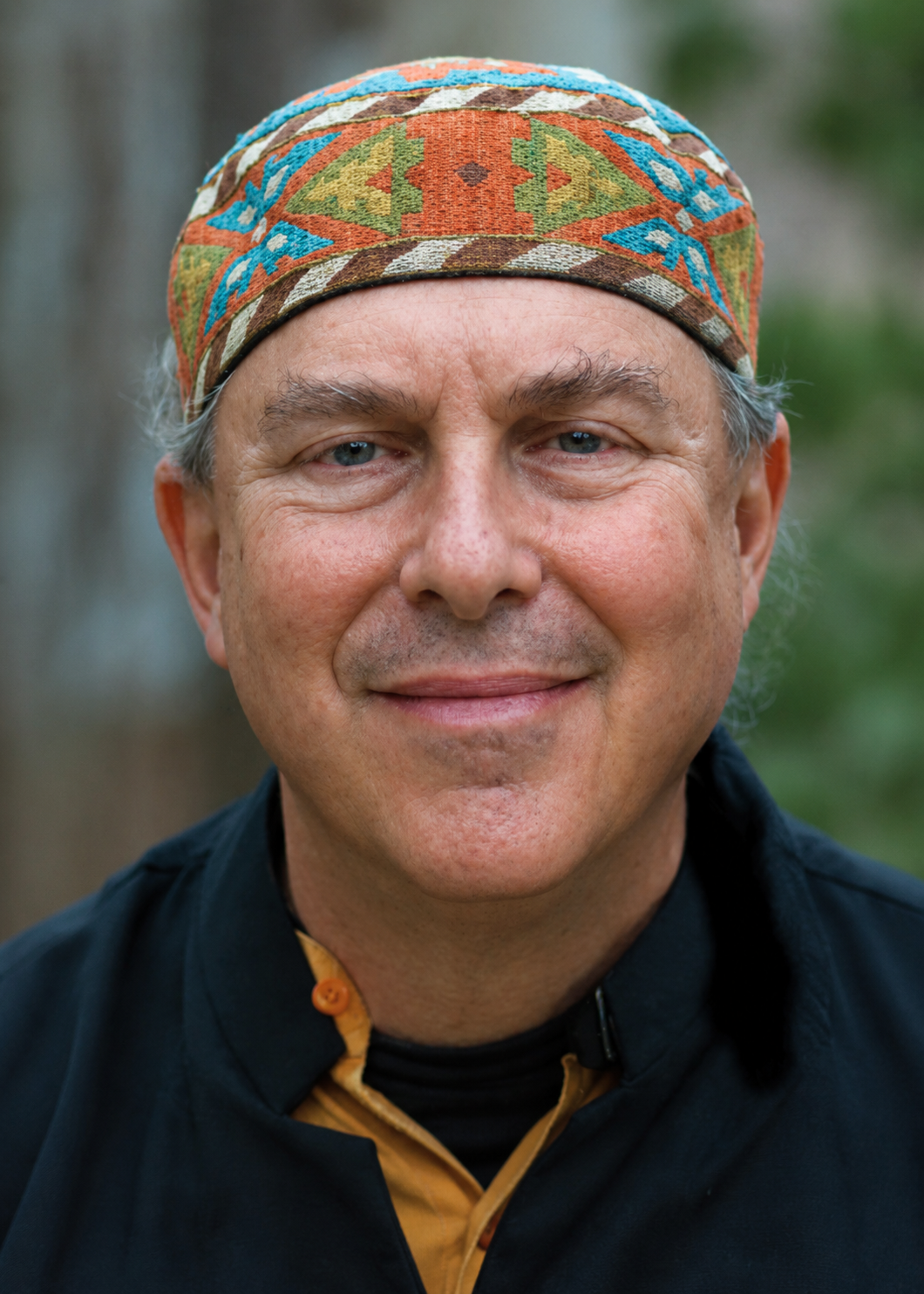
Pir Shabda Kahn is the present lineage holder of the Sufi Ruhaniat International, the stream of the Sufi message that flows from Hazrat Inayat Khan through Murshid Samuel Lewis. Born Peter Kahn in New York City, the second child of German Jewish immigrants who fled Europe just before the Holocaust, he studied at McGill University in Canada and at City College of New York. Hearing Ram Dass speak on New York radio set him on the seeker's path, and in June 1969 he traveled to a Sufi camp in Colorado led by Pir Vilayat Inayat Khan, where he first met students of Murshid Samuel Lewis.
On February 16, 1970, Shabda received bayat (initiation) from Murshid Samuel L. Lewis — Sufi Ahmed Murad Chisti, lovingly remembered as “Murshid Sam.” In the fall of 1970 he traveled with Murshid as his personal assistant on the East Coast, in the final months before Murshid Sam's passing in early 1971. Pir Vilayat gave him the name Shabda in the spring of 1971. He went on to serve Murshid Sam's successor, Pir Moineddin Jablonski, and on February 5, 1977 — the fiftieth Urs of Hazrat Inayat Khan — he was initiated as a Sheikh by Pir Vilayat Inayat Khan at Inayat Khan's tomb in Delhi. In October 1995, at a Sufi camp in Maui, Pir-o-Murshid Hidayat Inayat Khan initiated him as a Murshid.
Music has been the other great river of his life. During the 1970s Shabda built frame drums, tamburas and ektars under the workshop name Sound Instruments, guided by master musicians Hamza El Din and Pandit Pran Nath. In 1972 he met Pandit Pran Nath, the legendary master singer of the Kirana style and a devotee of the Chisti Sufis, and began the daily practice of North Indian classical vocal music — following in the footsteps of Hazrat Inayat Khan, himself a renowned musician. Shabda remained Pran Nath's devoted student for the twenty-four years until his teacher's death in 1996. Around 1981 Pran Nath authorized him to teach raga under the name of the Chisti Sabri School of Music, which Shabda directs to this day, carrying an oral tradition of Chisti Sufi vocal music into the West. He continues to perform and has released more than nine recordings of his music and teaching.
Shabda's path has been graced by other remarkable friendships. He was deeply influenced by a twenty-two-year relationship with the American mystic Joe Miller of San Francisco. Since 1981 he has also been a disciple of the 12th Tai Situ Rinpoche, a venerated incarnate lama of the Karma Kagyu lineage of Tibetan Buddhism; in the late 1980s, at Rinpoche's request, he directed the “Pilgrimage for Active Peace” events with His Holiness the Dalai Lama at Mount Tamalpais and Grace Cathedral, shortly after the Dalai Lama received the Nobel Peace Prize.
On February 27, 2001, upon the passing of Pir Moineddin Jablonski and by Pir Moineddin's appointment, Shabda Kahn became Pir of the Sufi Ruhaniat International. As Pir he guides the Ruhaniat's circle of teachers and serves as spiritual guide of the Dances of Universal Peace worldwide — the practice begun by Murshid Samuel Lewis in 1968 — having taught the Dances in more than twenty countries across Europe, Australasia, Turkey, Russia, India and South America. In 2003 he created the “Sufi Sesshin” retreat form, weaving together sitting meditation and the Dances, and in 2011 he co-authored Physicians of the Heart: A Sufi View of the Ninety-Nine Names of Allah with Murshid Wali Ali Meyer, Imam Bilal Hyde and Faisal Muqaddam.
Pir Shabda leads retreats and camps with an emphasis on the mysticism of breath, the science and art of wazifa and zikr, music, the walking meditations of Murshid Samuel Lewis, and the opening of the heart. He has been married to his wife Tamam since 1976, and his days at home begin with early morning prayer, meditation and raga singing. As he told an interviewer in 1995: “Sufism is a mystic path…based on the Awakened human Heart recognizing its Unity with the Divine. The signs of this experience are the emergence of love, tolerance, compassion, and courage.”