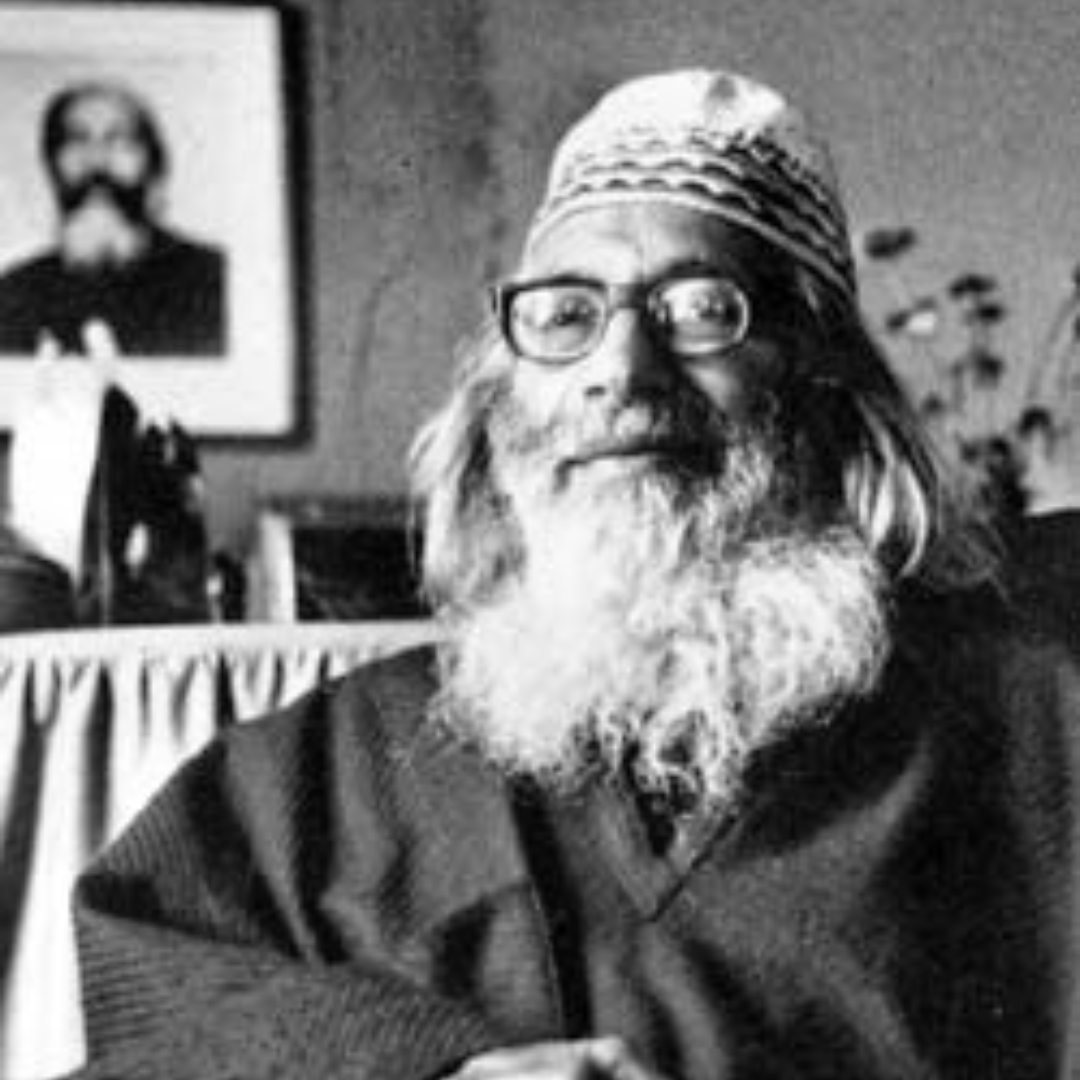
Murshid · Creator of the Dances of Universal Peace
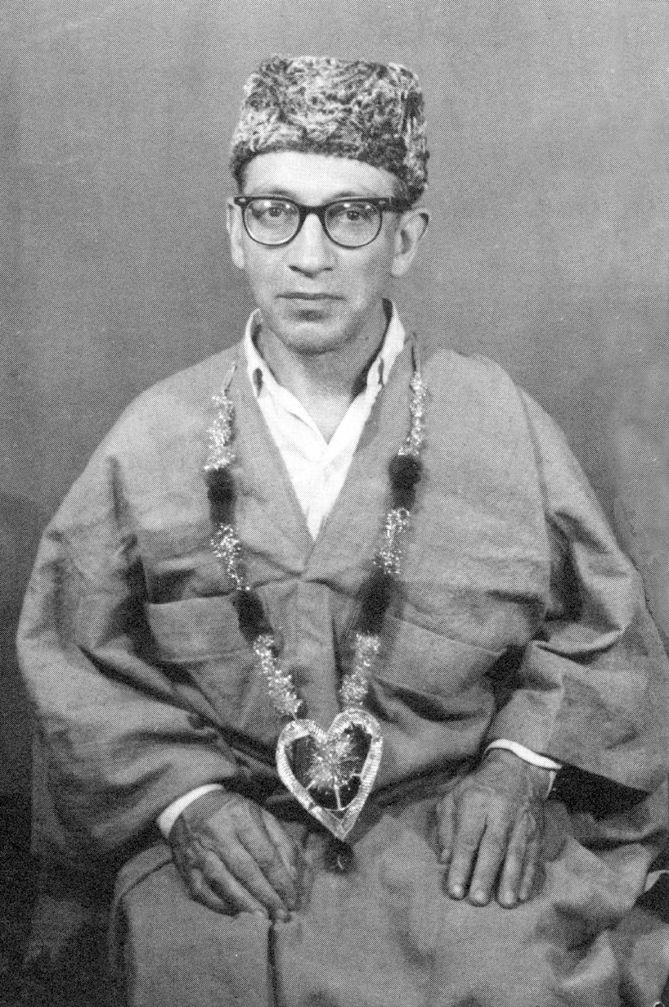
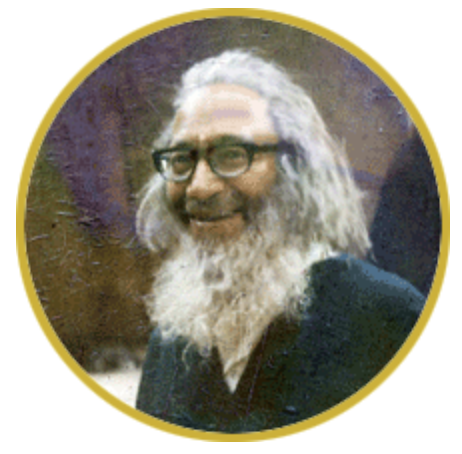
Murshid Samuel Lewis
1896–1971
“One of the reasons I am teaching this music and dancing is to increase Joy, not awe towards another person, but bliss in our own self. This is finding God within, through experience.”

Samuel Leonard Lewis — known to his students as Murshid SAM, and to the San Francisco newspapers as "Sufi Sam" — was born in San Francisco on October 18, 1896. His father, Jacob Lewis, rose from elevator operator to senior executive at Levi Strauss; his mother was Harriet Rosenthal. A child prodigy who graduated from Lowell High School with the highest grades in its history to that point, Samuel was nonetheless refused a college education by his well-to-do family, who could not accept his otherworldly leanings. He carried this rejection all his life, and came to see it as preparation for his later work with rejected young people. He often repeated the phrase of Christ, "The stone which is rejected is become the cornerstone," calling it the koan of his life.
In November 1919, drawn upstairs from a display of books on Sutter Street, he met Murshida Rabia Martin, the senior disciple of Hazrat Inayat Khan, and entered the Sufi community at Kaaba Allah in Fairfax, California. Around the same time he began formal Zen study, first with Rev. M. T. Kirby and then with Nyogen Senzaki, a disciple of the Rinzai abbot Soyen Shaku; in 1926 he helped Senzaki open the first official Zen meditation hall in San Francisco. In June 1923, following a vision, he was initiated by Hazrat Inayat Khan himself at the summer solstice — walking into the room, he reported, he saw only a tremendous light. He later said, "Inayat Khan was the first person to ever touch my heart." When Inayat Khan returned to America in 1926, he gave Samuel deep responsibilities for the Sufi work, naming him "Protector of the Message."
The decades that followed were years of obscurity and trial. He lived and worked at Kaaba Allah as gardener and groundskeeper through the Depression, made a transformative khilvat (solitary retreat) there in 1925, and wrote voluminous commentaries on the teachings of Inayat Khan. After the Second World War he was bypassed in the succession of the order he had served for decades; Kaaba Allah burned in 1949, and he found himself, in the words of his biographer Murshid Wali Ali Meyer, "disgraced, penniless, and broken." He persevered, taking up studies in horticulture and working quietly — a path that flowered into lifelong work on world food problems through international seed exchange, organic gardening, and desert reclamation, which has led some to call him a pioneer of green spirituality.
Recognition came from the East. In 1954, Swami Papa Ramdas and Mother Krishnabai came to San Francisco on their world tour, fulfilling a recurring vision Samuel had received with the words "By one year's time, by land or sea, I will come to thee" — and he found his Hindu guru, later visiting Anandashram in India, where Papa Ramdas sent him back into the world to serve. On journeys through Japan, India, Pakistan, and Egypt beginning in 1956, he was received by mystics and teachers of many schools. He was made a Murshid in the Chishti Order, the parent lineage of Hazrat Inayat Khan, and was publicly recognized as a Murshid by Pir Barkat Ali in Pakistan. In 1966 he was ordained a "Zen-shi" (Zen master) by the Korean master Dr. Kyung-Bo Seo — making him one of the rare Westerners recognized as a teacher in both the Sufi and Zen traditions.
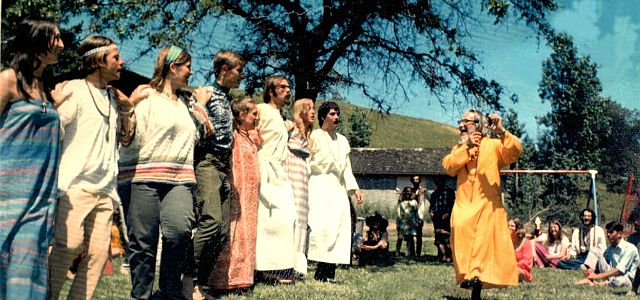
In 1967, recovering in a hospital bed, he reported hearing the voice of God say, "I make you spiritual leader of the hippies." Young seekers soon flocked to his door at the Mentorgarten, his San Francisco home, and in them he found the family he had never had. In March 1968 the first Dances of Universal Peace were danced in San Francisco — simple circle dances joining sacred phrases of the world's religions with melody and movement, drawn forth with the encouragement of his "fairy godmother," the dance pioneer Ruth St. Denis. To heal the wounds of war he taught a peace plan inspired by the spirit of Jesus: to "eat, dance, and pray with the peoples of the world." In his own words: "One of the reasons I am teaching this music and dancing is to increase Joy, not awe towards another person, but bliss in our own self. This is finding God within, through experience."
In December 1970, a fall down the stairs of his home left him with a concussion, and after two and a half weeks in the hospital he passed on January 15, 1971. At his request he was buried at the Lama Foundation near Taos, New Mexico, where a dargah completed in 2017 now surrounds his grave and welcomes pilgrims. Before his death he named his disciple Moineddin Jablonski as his spiritual successor, and the school he founded continues today as the Sufi Ruhaniat International — the lineage our community follows. The dances and walks he left behind have grown to many hundreds, danced in circles around the world. Facing the abundance of his final harvest, he received what he described as Divine instruction: "Harvest what you can, and leave the rest to Me."
Photographs